Bella Hanson | Queensland Country Life | 28 July 2026
12-minute read
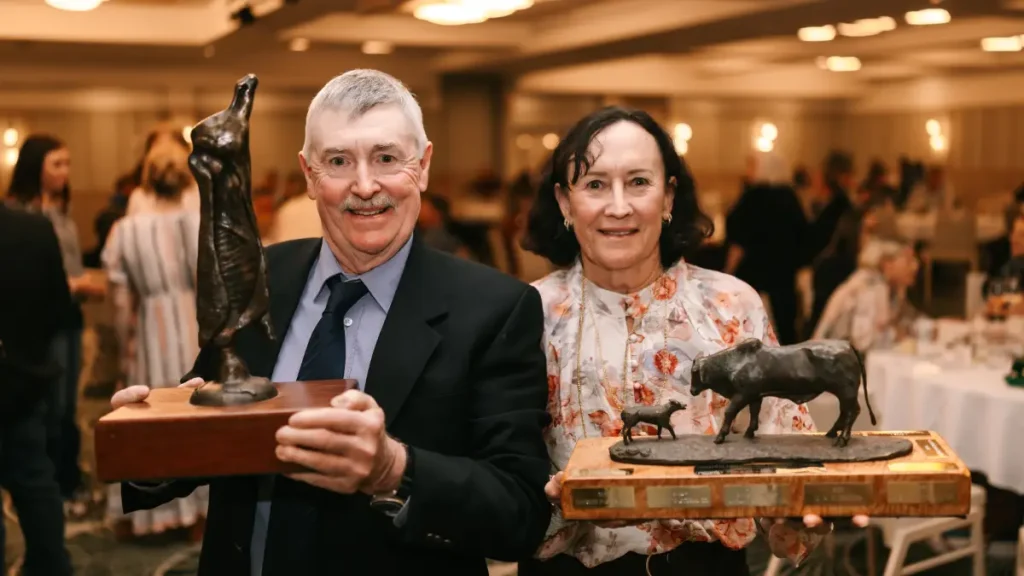
Ted Murphy may have laughed off his record-breaking performance at the 2026 Central Queensland Carcase Classic as “bloody luck”, but the history-making result was built on years of disciplined breeding, careful selection and an unwavering focus on commercial performance.
The Dysart producer of Tayglen Pastoral Company became the first exhibitor in the competition’s 19-year history to claim every major championship across both the grass-fed and grain-fed divisions, a feat Mr Murphy said came after years of “chipping away”.
“We’ve just been chipping away at it for years,” he said. “Sometimes you’re lucky and other years you’re not, but this year everything came together.”
Having first entered the competition in 2020, Mr Murphy has become recognised among the cohort of participants as one of the most consistent performers, collecting major awards over the past four years before finally completing the elusive clean sweep, picking up both the grand champion carcase and most successful exhibitor titles.
Surprisingly, Mr Murphy wasn’t convinced this year’s team was his strongest.
“I actually thought they weren’t as good as last year’s cattle,” he said. “You never really know until the results come out.”
Behind the winning pens was a straightforward breeding philosophy centred on consistency.
Mr Murphy runs a commercial herd of Charolais and Charolais-cross females joined to Angus bulls, a cross he believes consistently produces the type of cattle modern beef markets demand.
“They complement one another,” he said. “It gives us a really consistent line. They’re all pretty even and tight in type.”
While he has experimented with Shorthorn genetics in the past, Mr Murphy said he struggled to achieve the same level of uniformity across the progeny.
“I liked the cattle, but I just wasn’t getting a consistent cross,” he said.
“That’s probably more my fault than the breed, but I keep coming back to the Charolais-Angus cross because I know what I’m going to get.”
That predictability becomes particularly important when selecting cattle for the Central Queensland Carcase Classic.
Rather than waiting until cattle are closer to finishing, Mr Murphy identifies potential competition animals as weaners.
“We sort them when we wean them,” he said. “We pick out the early maturing cattle that we think will suit grain feeding and the others that are better suited to grass.”
Even then, he admits there is no perfect formula.
“You think you’ve picked the right ones, but sometimes they prove you wrong,” he said. “It’s still a bit of luck.”
This year Tayglen Pastoral Company entered 64 head across the competition, split between the grain-fed and grass-fed sections, with the grass-fed cattle finished entirely on forage crops before processing.
When selecting genetics, Mr Murphy said he was chasing a balance of growth, muscle and eating quality rather than focusing on any one trait.
“We’re trying to breed bigger, high-muscle cattle with as much intramuscular fat as we can,” he said.
For his Angus-sired cattle, he aims to breed animals capable of recording intramuscular fat figures well above five, while recognising Charolais-influenced cattle naturally marble differently.
“With Angus cattle I like to be above five-point-five. Charolais are a different animal, but you’re still chasing as much marbling as you can without giving away muscle.”
The commercial operation runs on developed forest country around Dysart, where cattle are managed under tick conditions, something Mr Murphy said simply requires staying on top of management.
While the history-making clean sweep was a career highlight, he said the competition remained far more than a pursuit of trophies.
“It tells you where your cattle are and what you need to improve,” he said. “A lot of people play golf or kick a footy. This is my sport.”
And after making history once, there’s little chance of him hanging up the boots.
“I’ll definitely be back,” he said. “I don’t know how I’ll go next year, but I’ll be back.”