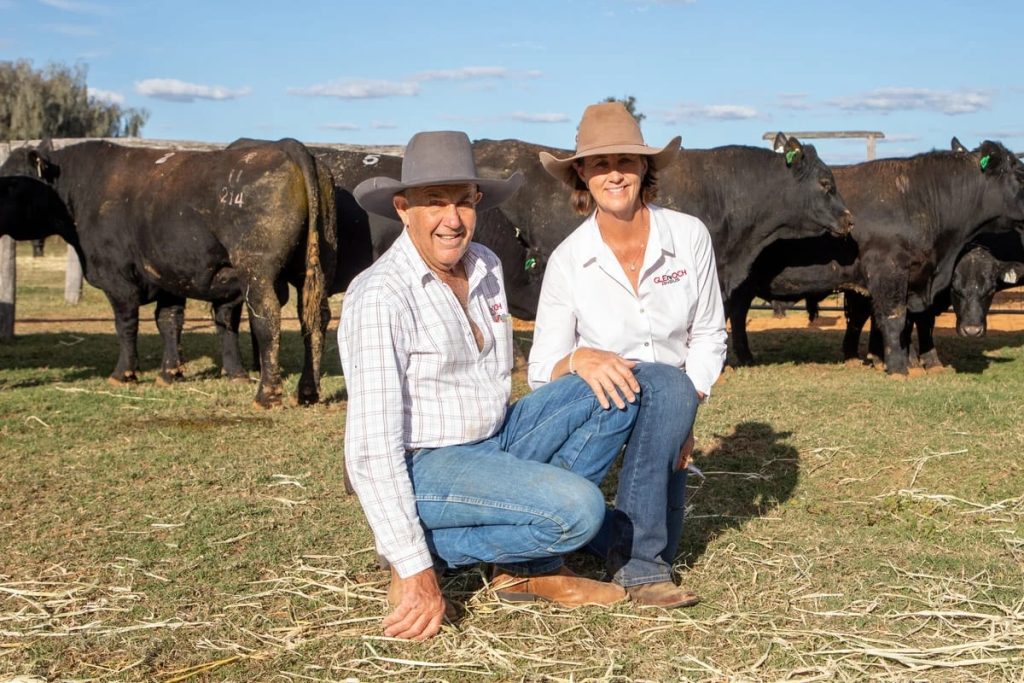
Within the Angus community and beyond, Roger and Tam Boshamer’s Glenoch Angus is a household name – one of the breed’s earliest adopters of performance testing, with genetics that have evolved and strengthened since the 1970s.
Underpinned by show ring domination during the 1990s, to today’s highly anticipated annual on-farm bull sale, Roger Boshammer has built one of Queensland’s most reputable Angus studs, and grown a significant land holding across Queensland’s coveted Chinchilla region in the meantime.
Yet his path was not quite so straightforward.
The son of a hard-working builder, what Roger lacked in land, he made up for in work ethic and today enjoys the luxury of hindsight when reflecting on growing his business.
“All I wanted to be was a farmer, and when you’re starting from scratch, it’s a big climb”, he muses, recalling purchasing his first stud cows at the top of the market in 1974 – followed swiftly by a beef market crash that lasted four gruelling years.
Throughout these tough early years was Roger’s unwavering mentor and champion, his uncle, WJ (Jack) Atkin, founder of Sandon Angus.
Jack was a large inspiration behind the establishment of Roger’s Glenoch Angus just prior to the 1974 crash, and the two herds shared similar breeding philosophies, and while separately owned, were operated under the same umbrella for management and marketing purposes until Jack’s passing in 2018.
In a nod to the long partnership, the Sandon Glenoch Angus name continues, with the annual on-property sale held every Spring.
Land leased from Jack also proved a saviour during the challenging cattle slump as Roger recognised an opportunity in rockmelons – a profitable enterprise that lasted 30 years and provided the launching pad for his cattle operation.
“The block I leased had an overland lagoon storage, so I turned my hand to melons, and from 1981 to 2011 they provided a great source of cash flow to grow the cattle business,” Roger explains.
“Those were exciting days, but hard work – if you wanted more money, you just planted more melons, and inevitably I would end up doing the work of two men – that’s why they have lights in sheds and tractors!” he jokes.
“The melons were good to us, they helped educate four children and purchase land, however I always said that after 60 I wouldn’t pick another melon, and now if I want a melon I ring my neighbour and ask can I come and get one from their shed!”
A step ahead of the herd for business success
Today, Roger and Tam run 3,000 hectares north-east of Chinchilla, dedicated wholly to their cattle operation.
Considering the value of the country, they choose to focus on breeding stud cattle, rather than running a commercial operation, however their bulls are bred to integrate exceptionally into a commercial herd.
“For 50 years we’ve been breeding cattle with emphasis on fertility and production traits,” Roger explains. “We aim to produce functional, fertile and adaptable cattle that have evolved under commercial conditions.”
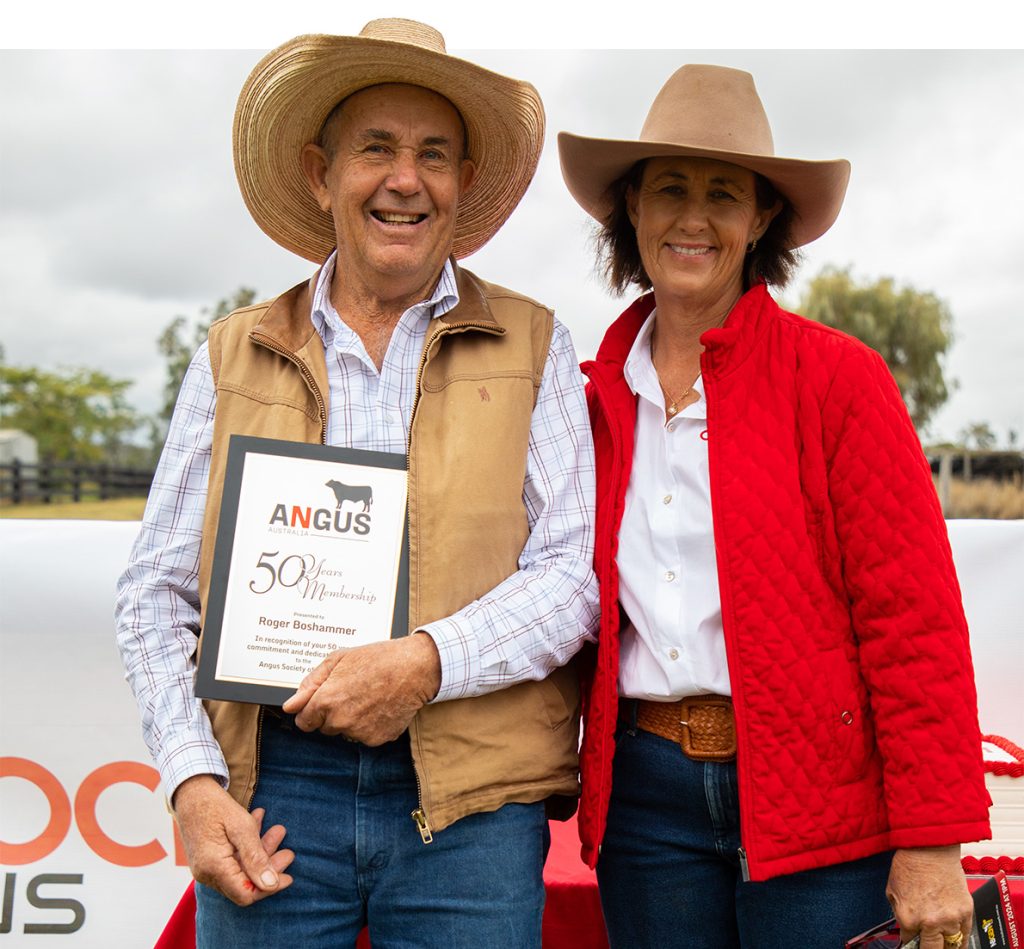
“Our breeding decisions are based on genetics that improve the value of our clients’ cattle, in their breeding herd and along the supply chain to produce a sustainable product.”
What customers won’t see at Glenoch is a heavy 1,000 kilo beast.
“A bull has to be an athlete when you put him in a commercial herd, he has to fight for his natural desire, and I don’t believe that young bulls should ever be overfed – it’s a detriment to their longevity.”
“Our bulls are offered in good, presentable condition so they can hit the ground running,” and with clients from the Gulf to the South Burnett and out to Cunnamulla, he says if you “throw a handful of rice across a Queensland map, that’s where our bulls are.”
Early adopters of BREEDPLAN, herd number restrictions across their initial Brigalow country demanded efficiency.
“We had to be tough on cows, we could only afford to keep the best of the best, anything under the standard went, and from this strong base the quality of our genetics has continued to evolve and improve ever since.”
During an era when the Angus breed was considered the ‘poor cousin’, Roger and his uncle Jack were also ahead of the herd recognised the breed’s value.
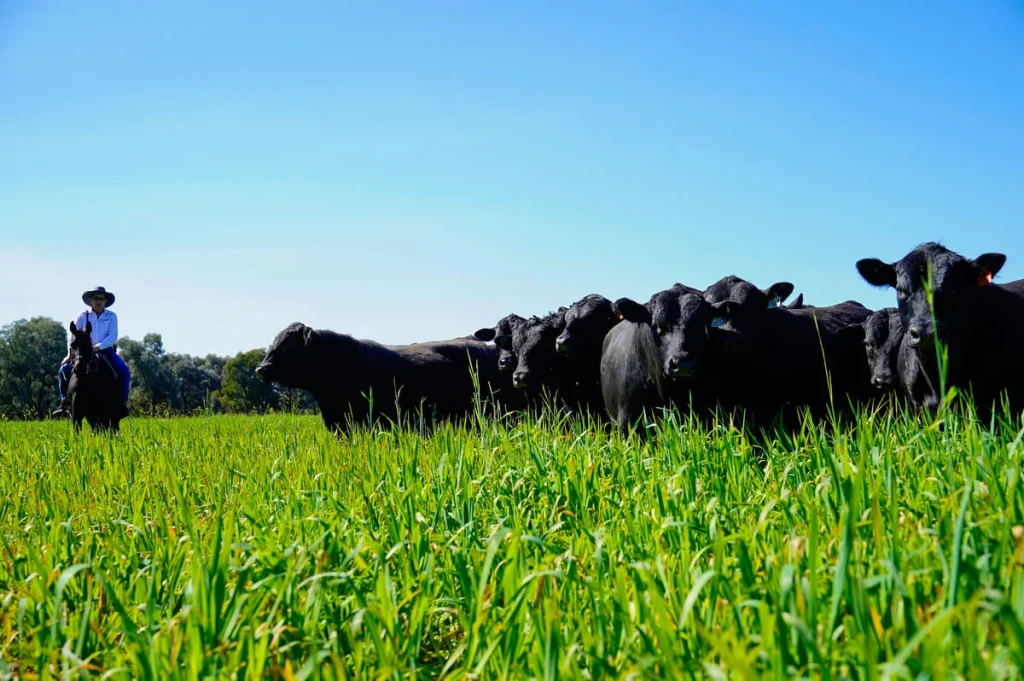
“Anything with a bit of Angus in it always dominated the Hoof and Hook competitions, and my uncle always said Angus fatten from the inside out, which is essentially what we’d today call marbling.”
“We knew this trait made for consistently good eating, and suspected that sooner or later people were going to realise the value of beef’s eating quality – and now here we are.”
And Roger would know – he starts every day with a rib fillet and eggs and laughs that he could “eat corned beef seven days a week”.
Encouraging an independent next gen
Roger admits he encouraged his children, Justin and wife, Kate, Allison, Nick and wife Kate, and Belinda to pursue their own careers, “I didn’t want them to be waiting around for me to die before they could start their lives” – and today three run their own independent cattle herds, while Belinda works in corporate agriculture.
“Tam and I continue to run this business, and when I look back, I’m certainly proud of what’s been achieved over the past 40 years, particularly to see my children rurally based and doing what they love.”
Tam has been an integral part of the business since 2011.
With three adult children of her own, Jock, Claudia, and Susanna, Tam grew up on a Glen Innes property where her family bred stockhorses, cattle, and sheep.
After completing her education at Orange Agricultural college, her interest in Angus cattle began when she lived near Guyra, NSW at “Outer Bald Blair”, Glenavon Angus stud.
It was here, she explains, she gained an insight into the stud business and the people involved in the Angus world.
“When I met Roger at a campdraft, it became clear we had a lot in common, especially our mutual interest in the land and in stud cattle and horses.”
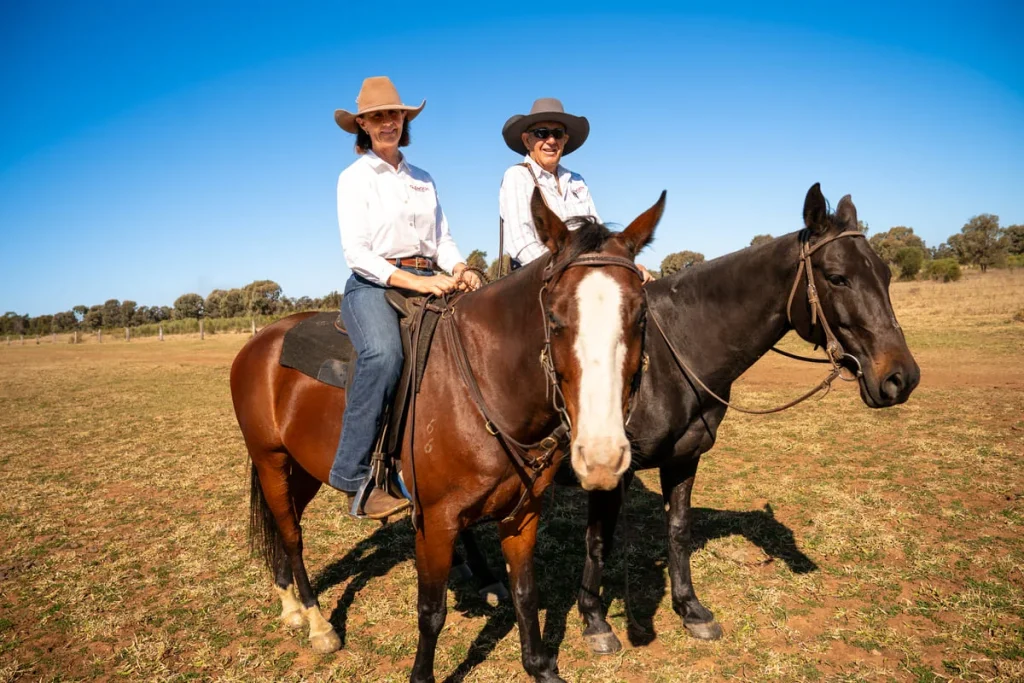
“In the beginning I spent most of my time on a horse mustering and learning the ropes – After six months, Roger said to me ‘It is sink or swim here, and you’ve swum’, and I received this light-hearted comment as a compliment and an achievement.”
With her first year on the property coinciding with a severely wet season, she reflects that it was a huge eye-opener into the world of stud breeding and artificial insemination.
“Roger taught me how to prepare the AI straws for him, which is a process of identifying the cow and who she is to be bred to, drawing the straw in the nitrogen tank, thawing it and then putting it in the gun for insertion into the cow.”
“It rained nine inches during November, we were working in the rain, I’d be riding home at 10pm in the dark, mosquitos the size of turkey’s hovering, though, it was a time of learning and working hard to make a go of it.”
The couple continue to work together as a team on the AI program, and the breeding process behind the operation is a particular highlight for Tam, and challenging their herd for continual improvement the source of great satisfaction.
“We research bloodlines and talk to our friends in the industry and analyse EBVs, with our aim to have a balance between EBVs and phenotype to try and predict how the mating will be.”
“I love seeing the calves being born by the sires that we choose – the research that goes into the type of bulls, and then how those calves look on the ground compared to other sires.”
“To then nurturing these calves through as yearlings, then as herd bulls selected into the final draft that we present for sale is always special, especially when you feel confident that you have produced a quality article suitable for the Australian climate, born and bred in Queensland.”
Rabobank supports growth, decade after decade
A long-term Rabobank client since 2003 – back in the PIBA days – Roger describes his relationship with the bank as ‘refreshing’.
“It’s so nice to be with a bank that doesn’t charge us every time we move, everything is transparent and it’s a simplified way of banking, particularly thanks to the All-in-One account which lets me set interest rates based on the opportunity I perceive.”
During his time with Rabobank, Roger has managed to purchase three additional properties, including two previous family farms that are now back in his hands.
“The key in business is to make a dollar, and Rabobank has helped us grow, and create the scale and efficiencies necessary to run a profitable business.”
“Business constraints are getting harder – input costs, land values, seasons, compliance – our job is to breed bulls that produce calves that make a profit for our clients, we’re all chasing the same outcome, and there’s no room for a weak link in the chain, which is why we value Rabobank so greatly.”
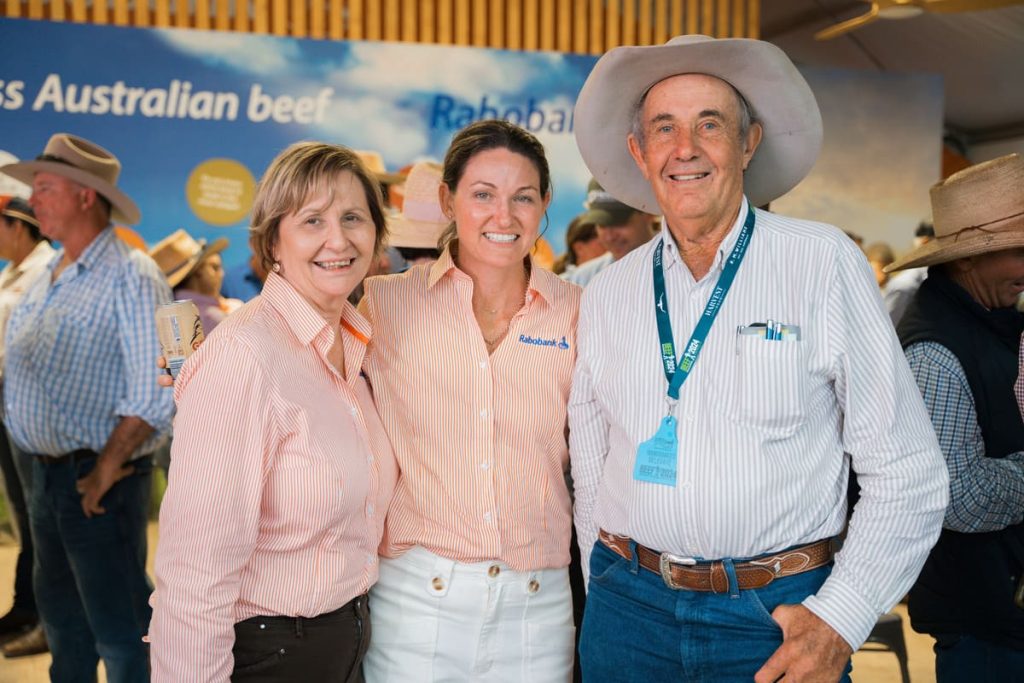
The knowledge and expertise of their Dalby branch Rabobank managers is another strong drawcard.
“Agriculture is a specialised industry, and Rabobank knows the game inside out, it knows that our business ebbs and flows with the seasons and markets and that there’s not going to be a constant stream of income – understanding that and helping our business adapt during the leaner years has been a game changer for our growth.”
And just as genetic data helps strengthen the Glenoch herd, the RaboResearch team is critical to helping make informed decisions across the operation.
“We appreciate making educated decisions, and RaboResearch provide valuable up-to-date industry and market insights, and their analysis drawn from the wider world economy helps us enormously at the farm gate.”
“What we really value, above all, is that Rabobank has so many good people in the team – from our rural managers, Alyce Bryant and Matt Reen, to Rabo Research analysts, it really does feel like the whole bank is rooting for our business to succeed.”
“Plus,” he winks, “Rabo certainly know how to put on a good Christmas event!”